Discovery & Analysis
Clarify audience profiles, intents, constraints, and success signals.
Designing the GTM digital experience for an animal health company's Swine Business Unit, serving veterinarians, KOLs, and farmers within regulatory and CMS constraints.

I redesigned the Go-to-Market digital touchpoint for the Swine Business Unit of a regulated animal health company, moving it from a generic content hub to a profile and intent-led experience serving veterinarians, KOLs, and farm owners.
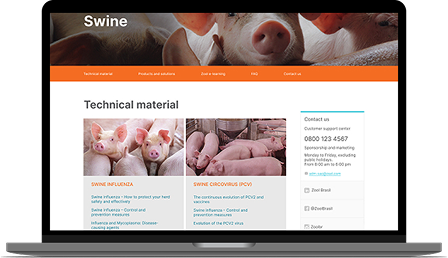
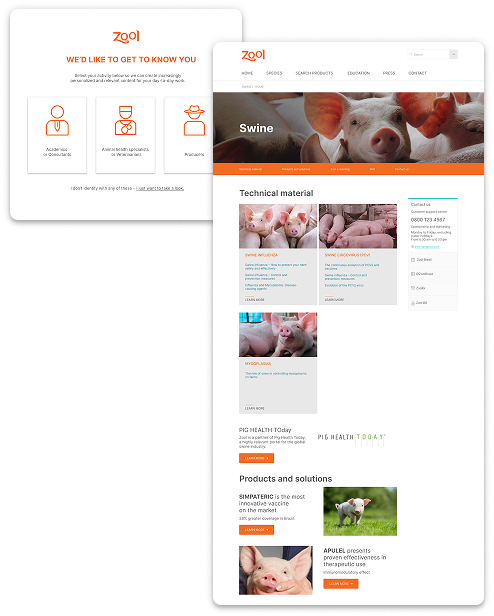
The portal treated very different audience profiles as one. Content depth and language often didn’t match the user’s role, which increased cognitive load and made discovery harder. This created noise to people wandered across unrelated sections, and the channel underperformed as a GTM asset for education, trust-building, and driving next actions.
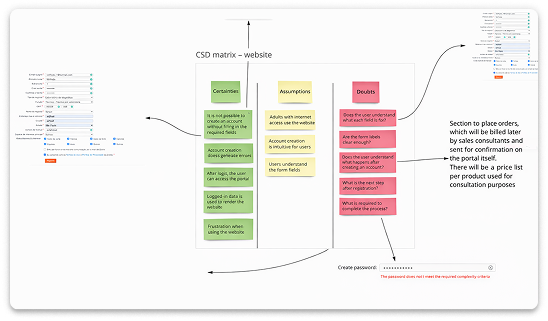
Sole designer on the project. I led UX/UI end-to-end: I framed the problem, defined the structure and navigation model, designed user journeys, produced wireframes, and delivered implementation-ready UI. I facilitated decision alignment with business stakeholders and partner teams (PM/PO, engineering, SEO/analytics, and the client's product and business team) to keep the solution feasible within platform constraints.
To translate the new Go-to-Market direction into a shippable experience, I structured the work in three connected pillars:
Clarify audience profiles, intents, constraints, and success signals.
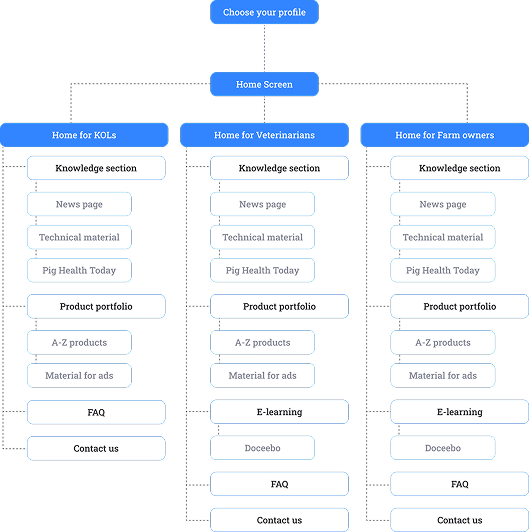
Define profile-led paths, navigation, and content rules.
Deliver production-ready UI within existing platform boundaries.
The project delivered a validated information architecture and segmented experience aligned with the Swine BU Go-To-Market strategy and existing technical constraints.
Key stakeholders aligned on audience segmentation, content hierarchy, and navigation logic, creating a clear foundation for implementation and future evolution of the digital channel.
Profile-led paths vs. one portal for everyone
Higher structural complexity.
Trade-off: faster discovery and stronger relevance per audience.
Content depth by profile vs. “same content for all”
Reduced confusion for farmers while keeping credibility for veterinarians.
Trade-off: increased editorial complexity.
Progressive engagement vs. early gating
Prioritized adoption and early engagement.
Trade-off: gating can be introduced later once value is proven.
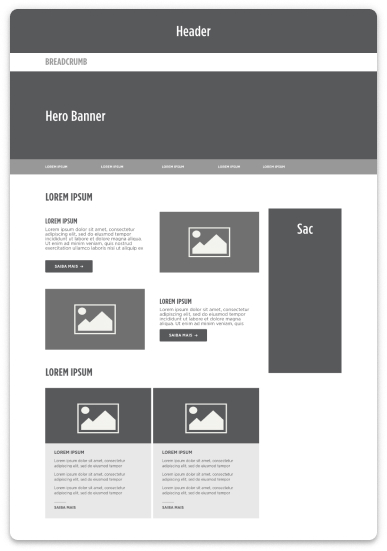
Because this was a consultancy engagement, my scope ended after delivery, so I did not run a full post-launch measurement cycle.
Still, success was defined as adoption and engagement by profile (content views, time-on-page, and journey progression).
What I delivered enabled measurement: clear journeys and CTAs per profile ideal for event tracking and for comparing performance across audience profiles over time.
A profile-led navigation model with consistent rules for content depth and language.
A scalable structure that supports content growth without breaking findability.
A measurement-ready setup: journeys and CTAs that can be tracked by audience profile to validate impact.
Now (0–4 weeks) → Next (1–2 months) → Later (quarter+)
Instrument analytics by audience profile: time-on-page, scroll depth, CTA clicks, pages per session, and journey completion. (Now)
Establish a baseline, then run profile comparisons (veterinarians vs. farmers) to identify bottlenecks and opportunities. (Next)
Iterate on navigation and content prioritization based on engagement signals, while keeping progressive engagement principles. (Later)